The Income Tax Department has made a major structural change in TDS compliance.
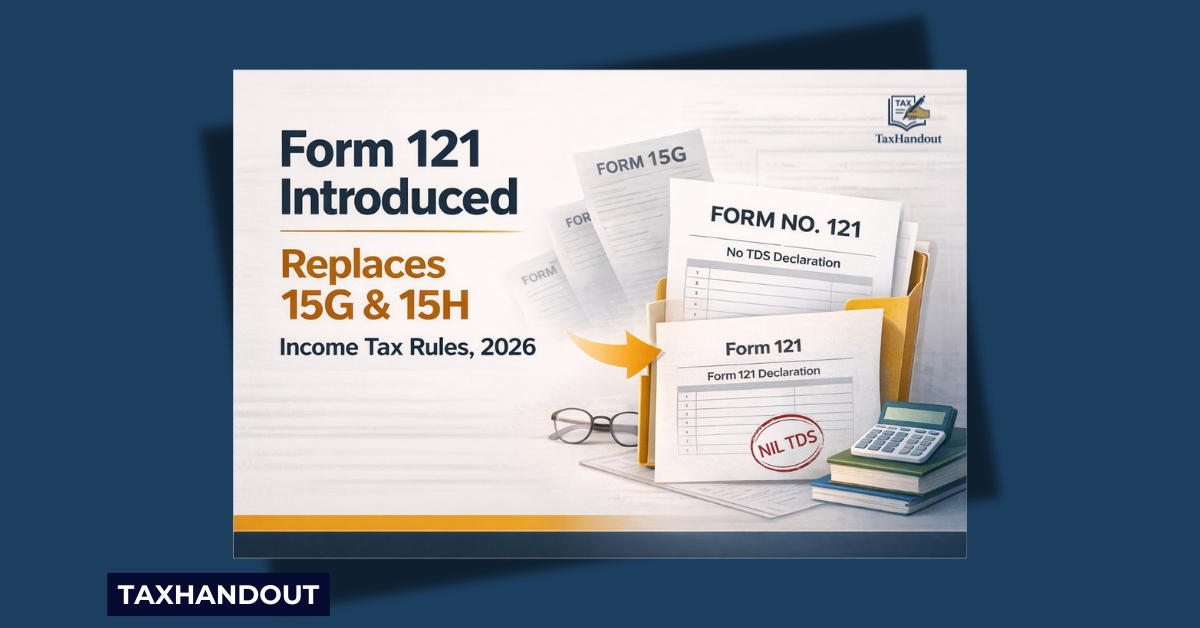
From 2026 onwards, Form 15G and Form 15H are replaced by a single unified Form – Form No. 121.
This is not just a change in numbering, it changes how declarations are filed, verified, and tracked.
Before this amendment:
- Form 15G → For individuals (below 60 years)
- Form 15H → For senior citizens (60 years or above)
These forms were used to declare that total income is below taxable limit, so that TDS is not deducted.
As per the notification, Form No. 121 is a new consolidated declaration form under section 393(6).
It replaces both Form 15G and 15H.
Key Objective of Form 121
The purpose remains same:
To allow eligible taxpayers to receive income without TDS deduction, if their tax liability is NIL.
But the structure is now more detailed and controlled.
1. Part A – Filled by Taxpayer
Includes:
- Basic details (Name, PAN, Address)
- Residential status
- Age declaration (important for senior citizens)
- Estimated income
- Total income of the year
- Details of earlier Form 121 filed
📌 Notably, the form now requires:
- Aggregate income declaration
- Tracking of multiple declarations in same year
👉 This was missing earlier in Form 15G/15H.
2. Part B – Filled by Deductor
This is a major upgrade.
Now the deductor must report:
- PAN & TAN details
- Unique Identification Number (UIN)
- Date of receipt of declaration
- Income amount covered
👉 This ensures full traceability in TDS system.
Form 121 applies to:
- Interest income (bank, post office, etc.)
- Insurance commission
- Rent income
- Mutual fund income
- Dividend income
- NSS withdrawals
- Life insurance payouts
👉 So coverage remains similar but now more structured reporting is required.
Key Differences: Old vs New
| Particular | Form 15G/15H | Form 121 |
| Number of forms | Separate (15G & 15H) | Single unified form |
| Tracking of multiple declarations | Not strict | Mandatory reporting |
| Deductor reporting | Limited | Detailed (UIN, tracking) |
| Income aggregation | Not clearly enforced | Mandatory |
| Compliance level | Basic | Advanced & system-driven |
You should file Form 121 if:
- Your total income is below taxable limit
- You want to avoid TDS deduction
- You are earning:
- Interest
- Dividend
- Commission
- Insurance income
Form 121 is a compliance tightening move by the government.
It replaces Form 15G & 15H with:
- More transparency
- More control
- More accountability
👉 Taxpayers and professionals must now be extra careful while filing declarations.
Good effort
Please send me blank form of Form 121 in PDF file at your earliest.
Thank you
Form 121 will be provided by bank or institution and it will still take around 5-10 days